
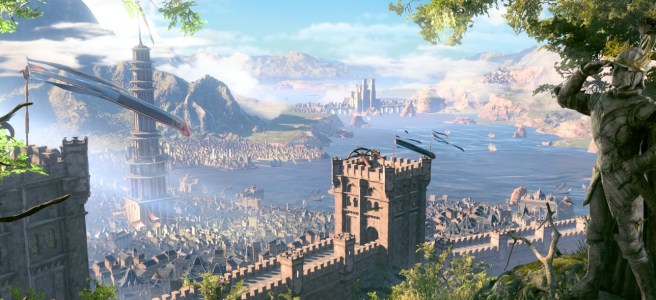
You do not need me to tell you whether or not Baldur’s Gate 3 is worth your time and money. The game’s critical and commercial success speak for themselves. While I do my best to avoid making sweeping generalizations, I feel safe in declaring that if you’re still not all that interested in Baldur’s Gate 3, you’re not all that interested in CRPGs, period. Baldur’s Gate 3 is a crowning achievement, and I mean that in an almost literal sense. It is so complete as a game that I’ve come to regard it as the culmination of all Western RPG development since the release of Dragon Age: Origins, if not even earlier.
Therefore, I have long since decided that writing a conventional review of this game is a waste of everyone’s time. Odds are you’ve played it for yourself already, and if you haven’t, it’s not for lack of interest. So instead of a conventional review, I’ve decided to highlight four things that I think Baldur’s Gate 3 does really well, and that have helped fuel its success. Please note that there are some spoilers ahead! While I have made an effort to avoid spoilers when possible, there were times when it was best to describe in-game events in some detail. Consider yourself warned!
Sandbox, Not Open World
If I may, I’d like to spend a moment giving you kids a lecture about how things were Back In My Day. I’m so old that not only do I remember the release of GTA3, I can remember the context of its release. GTA3 was the first open-world game in the modern sense, and therefore, it was the beginning of a new era in gaming. But it also served as the capstone to the previous era; before open-world games existed, open-world games were the goal the medium was explicitly working towards.
Before GTA3 arrived, we all yearned for a game that let us go anywhere and do anything we could think of, and many of the landmark titles of the late 90’s pointed towards this future. To name but one example, Duke Nukem 3D isn’t an open-world game by any stretch, but a big part of what elevated it above a DOOM clone with jumping was all the extra things the player could do and interact with. The game was still based around a core gameplay loop of killing enemies and finding keys to access areas with more enemies, but you could also turn on TVs, use security cameras, and throw money at strippers. This was a big deal back then! It was a real breakthrough in giving the player freedom of action. The immediate, earth-shattering success of GTA3 hardly requires an explanation, but in this context its success becomes even more obvious. It was the game we had always wanted.
In the decades since, open-world gaming went from revolutionary to practically standard. Such is the way of things, but as a gamer who went from pining for the day open-world sandbox gaming came into being to viewing open-world games with real contempt, I can’t help but be bummed out about how the genre has evolved. Open world games were, in their infancy, often referred to as open world sandboxes; not only were you given huge open areas to explore in the PS2 GTA games, you were given a whole bunch of stuff to do within them. You could go straight through the story missions or go on horrific crime sprees or even just work as a cabbie, if that’s what you were into.
The problem with contemporary open-world games is that too many of them are built around a core gameplay loop of repetitive busywork. The exploration is still a key component of these games, but the freedom of action is all too often excised. You travel from point to point collecting vendor trash, fighting the same enemies over and over again, and using dull, lifeless crafting mechanics to obtain marginally useful items. Even the very best open-world games feature sizable chunks of filler, and most of the rest feel like the developers chose to make them into open-world games solely for marketing purposes. In these dire cases, openness does not actually make those games more fun. It just adds busywork.
What makes Baldur’s Gate 3 feel like a breath of fresh air in modern gaming, then, is that its gameplay prioritizes freedom of action and quality of quests over the high-quantity, low-value trappings of its contemporaries. Baldur’s Gate 3 really isn’t an open-world game. Yes, individual areas within the game are massive and open for exploration, but they are also sectioned off from each other. The player is also locked out of the early-game areas entirely by the time they reach the titular city.
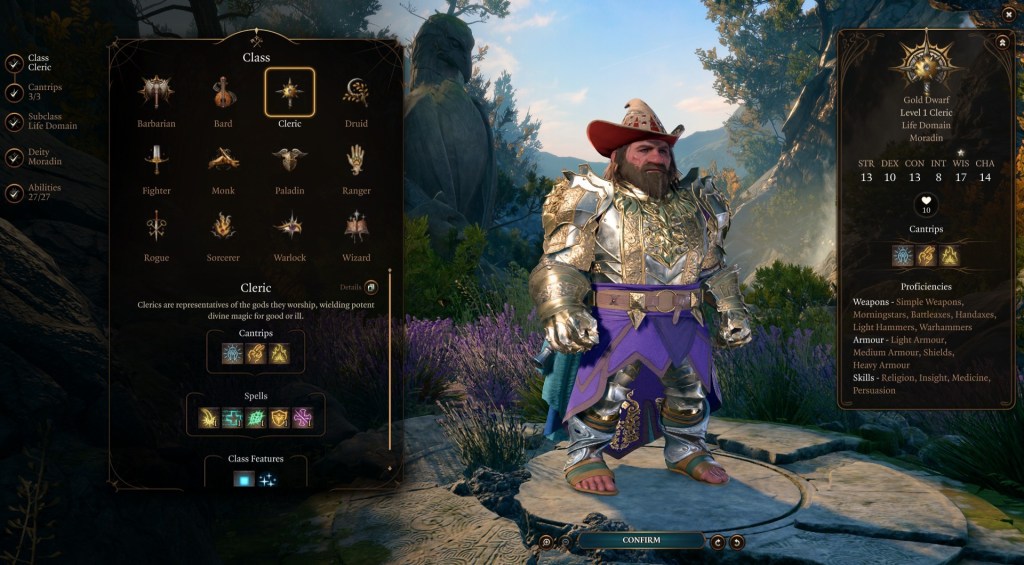
But even though Baldur’s Gate 3 is not really an open-world game, it is a sandbox. The player is given the freedom to solve any problem and overcome any challenge however they see fit. Struggling with a combat encounter? Maybe you can use the terrain to your advantage, or sneak around your enemies. In many cases, it’s possible to talk your way out of fighting entirely. Even in the worst case scenario, you can always bring bunches of explosive barrels to the fight to flip the odds in your favor the old-fashioned way. Is there an area of the map you can see, but can’t access? You can jump, fly, teleport, pick locks, turn yourself or a party member into a cloud of gas, turn yourself or a party member into an animal, and, in most cases, go somewhere else entirely and stumble into a different path to the area you were trying to get to in the first place.
The freedom of action given towards accomplishing mundane tasks is further extended toward quest resolution. Every quest can play out multiple ways, depending on both the choices the player makes and the accidents the player inevitably causes while trying to achieve their goals. Even if this results in an accidental quest failure, that’s hardly the end of the world. You’ll still get enough done to hit the level cap and obtain your share of sick loot and gear.
Perhaps most impressively, Baldur’s Gate 3 almost never feels repetitive or grindy, which is nothing short of miraculous for a game of this size. Enemy types and combat encounters are impressively varied, and when enemy types do repeat, it is always justified with in-game storytelling. The game can get repetitive if you choose to disarm each and every trap in a trap-filled room, but there’s almost certainly a way to circumvent those traps instead. BG3 provides a curated, specific experience within a structure that can accommodate just about any play style you can think of, resulting in a game with almost no filler. Even the crafting system isn’t completely terrible! That’s damning with faint praise to be sure, but that’s still more praise than almost every other crafting mechanic merits.
The BioWare Formula, Revised and Updated
Baldur’s Gate 3‘s title is neither an accident, nor an exercise in empty branding copy; the first two games in the series were both key titles in the push toward open-world sandbox gaming in the late 90’s and early 2000’s. While the level of complexity of the proto-sandboxes of the originals is nowhere near the level seen in Baldur’s Gate 3, very few games from 1998 let you get drunk in a tavern, kill NPCs, choose whether to turn in quest items or keep them for yourself, or put you in immediate trouble with the local constabulary when you’re caught stealing. The original Baldur’s Gate was also a huge breakthrough in video game storytelling at the time, as it demonstrated much greater ambition than every previous licensed Dungeons & Dragons video game.
But while the original Baldur’s Gate was a a juggernaut in its day, it has lived in the shadow of Baldur’s Gate 2 from the very moment the sequel arrived. All the things that the original Baldur’s Gate did well – the slick interface, the vibrant, lived-in presentation of the Forgotten Realms setting, the addictively simple-yet-complex gameplay, and especially the writing and character development – were provided in overwhelming abundance, and with even greater sophistication. It’s still considered one of the very finest video games ever made, and any PC gaming old heads you come across in your travels are likely to speak of it in hushed, reverent tones.
In contrast to the relatively linear original, Baldur’s Gate 2 gives the player has great freedom in choosing what quests to do and when to do them. Most of the quests available are technically optional, but many of these optional quests are imbued with weight and substance. Baldur’s Gate 2 also broadened the focus of its storytelling, giving each and every recruitable party member the both a rich backstory and the opportunity for character development through questing. The actual main story quest is a relatively small part of the game, and only moves forward when the player chooses to move it forward. Will the player take their time and explore all the game has to offer, or will they advance through the main quest as quickly as possible?
The reworked format of Baldur’s Gate 2 served as a template that BioWare Studios continued to use for over a decade, to great success. The player progresses through a fundamentally linear narrative, but is also given a vast amount of optional but substantial quests to do, and great freedom in choosing when to do each. Recruitable party members and other NPCs are given backstory and character growth, and most players will likely need to play the game multiple times to complete every part of it. The net effect of this formula was that every playthrough feels unique, even when it really isn’t. Knights of the Old Republic, the Mass Effect Trilogy, and the aforementioned Dragon Age: Origins are all BioWare-developed games that follow this formula, and they along with Baldur’s Gate 1&2 are some of the most beloved video games ever made.
Baldur’s Gate 3 has a distinct core gameplay loop from the first two games in the series. It is based on the 5th Edition Dungeons & Dragons ruleset, which could scarcely be more different from the 2nd Edition Advanced Dungeons & Dragons ruleset featured in BG1&2. Combat is turn-based instead of real-time, which significantly alters the pace and flow of combat. Instead of the more straightforward dungeon crawling featured in BG1&2, each and every area in BG3 is chock full of secret and hidden areas, encouraging slow, careful, and deliberate exploration. Yet, when you pull back far enough, you can see how BG3 is built to provide an updated version of the same core gameplay experience. The first two games are built around a specific, immutable narrative, but one that provided players with enough freedom and choice to give each player ownership over their own individual playthroughs.

As much as I love the old BioWare classics, I found that their formula grew stale over time. Most of the player choices offered are binary at best, and false at worst, because the players’ choices and attendant consequences are almost exclusively confined to dialogue trees and cutscenes. If anything, later games from BioWare’s golden age give the player less freedom of action than the very first Baldur’s Gate; Mass Effect and Dragon Age don’t let the player break into people’s houses and steal their stuff. Once I saw how the formula worked, all I could see were all the choices I wasn’t allowed to make, and all the ways in which each playthrough was exactly the damn same.
Baldur’s Gate 3 has brought Larian Studios’ refined, sophisticated, and gameplay-oriented update to this framework to the masses, one they have been working on for at least a decade. Divinity: Original Sin and Divinity: Original Sin 2 are designed to give players a sense of freedom and ownership not only through dialogue-based choices, but gameplay-based ones, too. Divinity: Original Sin may be primitive when compared to BG3, but context is everything: when you compare D:OS to Dragon Age: Origins, the increase in player freedom is staggering. The player is given so many more options for character creation, character builds, party builds, and combat tactics, as well as actual puzzles and non-combat challenges. Divinity: Original Sin 2 provided an even larger increase in build options and freedom of action, giving the player a staggeringly diverse array of possible solutions to problems, both in and out of combat.
In fact, D:OS2 is so advanced in this regard that I don’t think Baldur’s Gate 3 adds much to this formula, outside of a handful of refinements. The sandbox was already built; Larian simply swapped out the toys. That said, those little refinements do add up, as Baldur’s Gate 3 polishes Larian’s formula to a mirror sheen. Every time you play through BG3, you will escape the Nautiloid, travel along the Chionthar River and through the Shadow-Cursed Lands, then head into the titular city. That never changes. But what does change are countless moments of actual gameplay, as BG3 has countless potential for its scenarios to play out differently. You won’t Thunderwave a minotaur off the edge of a cliff or hopelessly screw up playing the Newlywed Game with your boo at a carnival or accidentally blow up an entire Zhentarim hideout every playthrough, nor will you ever run out of character and party build options to experiment with. For an old BioWare head like myself, Larian’s new game design formula is the exact direction I wanted my story-driven RPGs to take, and I know I’m not alone in that.
The D&D Of It All
Is the use of the 5th Edition Dungeons & Dragons ruleset the worst thing about Baldur’s Gate 3? I’ve seen a couple of tweets arguing that it is, and I’d like to take this opportunity to push back against that idea just a tiny bit. Part of me hates to do this. Not only have I soured on 5E as a tabletop system, the license is owned by an awful company that is itself owned by an even worse one. On top of that, I certainly agree that the most important part of BG3‘s success, and the things about it that players have responded to most positively, are the result of Larian’s hard work and dedication. The reason BG3 is awesome is because Larian Studios did an awesome job with it, and it’s as simple as that.
That said, I do think that the use of the 5E ruleset makes BG3 more approachable, if not necessarily better. Divinity: Original Sin 2 is also an outstanding game, but longtime patrons of CRPG Corner know that I found it incredibly vexing at first and continued to find vexing from time to time even after I knew what was doing. While this is anecdotal evidence, everyone else I’ve spoken to who tried D:OS2 suffered through the same early-game struggles I did. D:OS2‘s system provides incredibly satisfying gameplay once you get the hang of it, but getting the hang of it takes real work (and probably a guide or twelve).
5th Edition D&D does not have this problem. The system’s player friendliness is instrumental in its relative popularity. This means that many players who picked up BG3 had some idea of what they were doing going in, and even if they didn’t, they had much better chances of catching on to the system by the time they completed the tutorial. So while I believe that any game Larian could have made as a follow-up to D:OS2 would have been excellent and successful in its’ own right, regardless of what ruleset it used, I do think that the player friendliness of the 5E ruleset has helped BG3 achieve such unprecedented popularity.
I also think Baldur’s Gate 3 benefits from being set in the Forgotten Realms, which is a D&D-owned setting. The Divinity: Original Sin series features memorable characters and witty dialogue, but in both games, neither the plotting nor the world-building on display are any great shakes. BG3 has both memorable characters and an amazing plot, one that demonstrates a quantum leap in storytelling over D:OS2. While this is speculation, I’m inclined to believe that this great leap forward is at least partially owing to the game’s setting. The Forgotten Realms have existed and been built out over the course of decades, and I can’t help but think that freed up the writing staff to focus on crafting the story itself.
Extreme Horniness
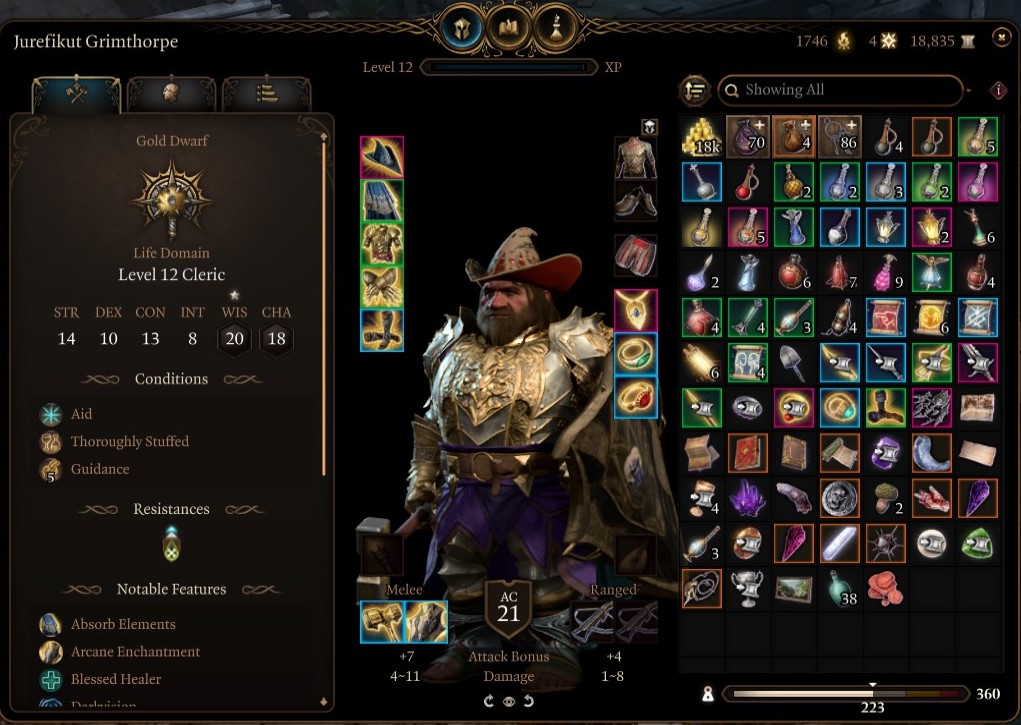
Baldur’s Gate 3 is the single horniest non-porno game I have ever seen by leagues. In my first playthrough, I practically had to beat away my almost every party member with a stick as they threw themselves at my main character repeatedly. Romantic subplots aren’t my thing, but I’ve been around long enough to know that lots and lots of players are into romantic subplots generally and very into BG3‘s potential for messy situationships, specifically. And that’s OK! Not everything is for me, and CRPG Corner is judgment-free zone. If you’re one of those people who love this game all the more for its ribaldry, go nuts! (Pun intended! But in a like, non-heteronormative way.)
I could go on about what makes Baldur’s Gate 3 tick, but I think even if I haven’t made my point well enough, I’ve made it as well as I’m going to. Larian Studios’ busted their ass to give RPG fans the game we’ve always wanted, and they can keep taking victory laps for eternity, as far as I’m concerned. Now if you’ll excuse me, I have serious business to attend to; my Dark Urge necromancer has to stack the Sword Coast with bodies until the threat of the Absolute is vanquished! See you later!

 Rob Writes About Whatever
One thought on “Baldur’s Gate 3 Has Ruined Our Lives”